
In many organizations, security is treated as an operational service.
Budgets are reviewed by procurement teams, deployment is coordinated by site administrators, and day-to-day matters are handled within facility management. On the surface, this structure appears efficient. A provider is appointed, personnel are deployed, and coordination continues at the operational level.
However, when security failures occur, the consequences rarely remain within those administrative boundaries. Operations are disrupted. Safety risks escalate. Investigations are initiated. Senior management becomes involved, often at short notice.
At that point, a more fundamental question begins to surface—one that is rarely addressed in advance:
Where do security decisions actually sit?
The Delegation Illusion
In practice, many organizations delegate the management of security services to operational or administrative functions. This simplifies coordination and allows contracts, staffing levels, and routine issues to be handled efficiently.
But delegation of coordination is not the same as delegation of accountability.
Security decisions shape outcomes that extend well beyond administration. They influence operational continuity, risk exposure, emergency preparedness, regulatory standing, and ultimately, corporate reputation. These are not purely administrative concerns. They are strategic considerations that sit closer to leadership than they often appear.
When the authority to make decisions is separated from the responsibility for outcomes, the system begins to drift. Not immediately, but gradually—through small compromises, delayed adjustments, and unclear escalation paths.
Procurement and the Limits of Cost-Led Decisions
Procurement functions play an essential role in evaluating vendors and maintaining contractual discipline. However, when security is assessed primarily through a cost lens, the underlying structure of the system can be overlooked.
Elements such as supervision frameworks, reporting discipline, escalation protocols, and integration with site operations are not always visible in a pricing comparison. Yet these are the elements that determine how a security system performs under pressure.
A contract may appear complete, and service levels may seem defined, but without structural alignment, the system itself can remain fragile.
Security, in this sense, is not simply a purchased service. It is part of how risk is managed within daily operations.
The Authority Gap
A common challenge emerges when individuals responsible for overseeing security performance do not have the authority to influence key decisions.
They may be tasked with maintaining discipline, coordinating responses, and ensuring that deployment functions as intended. Yet they may not control budget allocation, structural changes, or policy direction.
Over time, this creates a gap between responsibility and authority.
Decisions take longer. Adjustments become reactive. Escalation depends on informal channels rather than defined structure. Even capable teams begin to operate within constraints they cannot resolve.
Effective security systems rely on alignment. Responsibility, authority, and accountability must sit within the same framework. When they do not, performance becomes inconsistent—not because of effort, but because of structure.

Security Within the Operational System
In most environments, security is not isolated. It interacts continuously with operations.
Access control affects how contractors move through a site. Incident reporting influences safety responses. Perimeter management impacts logistics and flow. These interactions place security within the operational system, whether formally recognized or not.
When security is treated as a separate support function, these connections become weaker. Information moves more slowly, risks are identified later, and coordination becomes reactive.
When it is integrated into operational leadership, alignment improves. Decisions are clearer, communication is more direct, and response becomes more structured.
Recognizing Where Decisions Reside
Many organizations only begin to examine decision ownership after an incident has occurred.
At that stage, questions tend to arise quickly. Who defines acceptable risk? Who has the authority to adjust deployment? Who determines how incidents are escalated?
If these answers are unclear, coordination becomes more difficult at the exact moment clarity is most needed.
Establishing where decisions sit—before incidents occur—creates a more stable foundation. It allows operational teams to act with confidence and reduces dependence on improvised judgment under pressure.
Security Outcomes Begin Before Deployment
Security performance is often evaluated through visible indicators—personnel presence, patrol routines, or installed systems. Yet these are outcomes of earlier decisions.
The structure of deployment, the clarity of supervision, and the effectiveness of escalation are all determined long before personnel arrive on site. They are shaped at the point where authority, responsibility, and risk tolerance are defined.
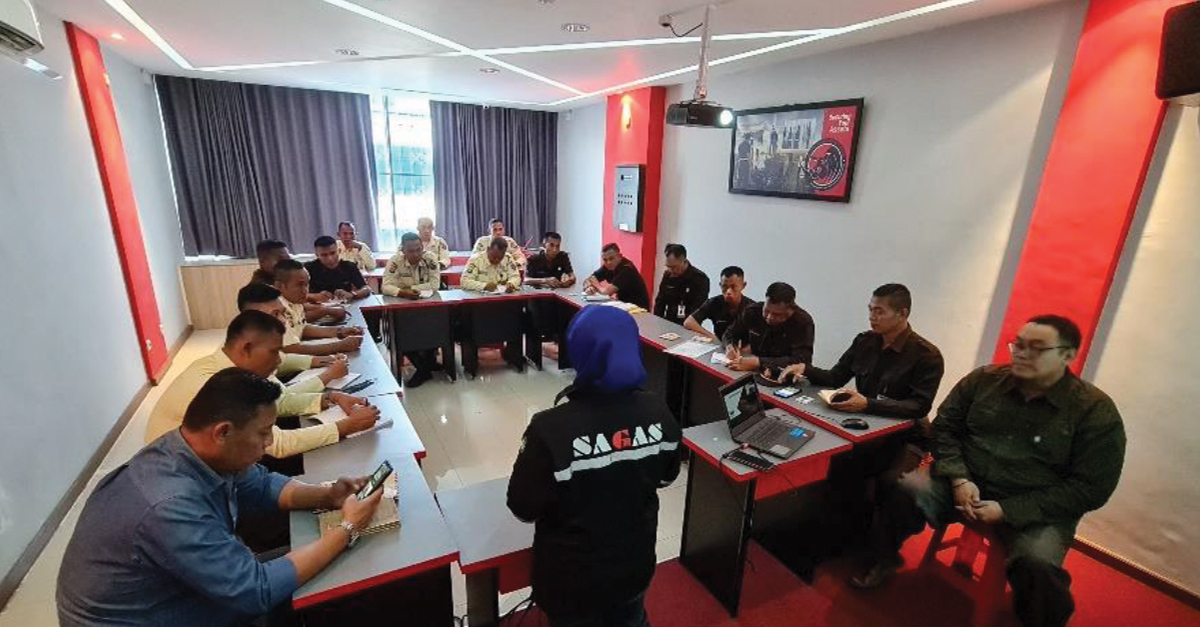
In this sense, security outcomes do not begin at the guard post. They begin at the decision table.
Organizations that recognize this distinction tend to maintain more consistent performance over time. Not because they deploy more resources, but because they align decisions with responsibility from the outset.
At SAGAS, we work with organizations that approach security as part of their operational structure—requiring clarity, supervision, and integration with site leadership.
If your organization is reviewing how security responsibilities are structured across teams, aligning decision ownership early can significantly improve consistency and response effectiveness. Because in complex environments, the effectiveness of a security system is often determined not by where it is deployed, but by where its decisions are made.

